
Trump’s meeting with Xi left more questions than answers
 First published in spiked, November 2025

The two global superpowers are locked in a perilous dance
It isn’t the war in Ukraine, or even Gaza, which occupies the thoughts of US president Donald Trump and his advisers. Nor is it his metaphorical war on woke. Instead, the most significant war of Trump’s presidency is America’s cold war with China.
Trump’s summit with Chinese president Xi Jinping last week, lasting just 100 minutes at the neutral Gimhae Air Base in South Korea, garnered worldwide attention. This is hardly a surprise – after all, it was the first time the leaders of the world’s biggest economies and militaries met face-to-face since Trump’s second term began in January.
Speaking to reporters after the meeting, Trump scored the meeting ‘12 on a scale of one to 10’. But, like many statements made by the American president, that one was both overblown and misleading.
Agreement was only reached over some of the sticking points that have plagued Sino-American relations in recent times, particularly under Trump. China walked back its threats to suspend exports of its critical minerals and agreed to buy American soybeans. A supposed agreement on fentanyl smuggling was also reached. The truce in the trade war, which had been set to expire next month, has been extended for another year.
Significant problems, however, remain unresolved – the biggest of which is Taiwan. Xi has told the army to be ready to invade a territory the CCP still regards as part of China by 2027. Most people believe that America, while officially maintaining a position of ‘strategic ambiguity’ with regards to the island nation, would defend it.
Despite Trump’s breezy verdict, most of the media notched the meeting down as a win for Xi, or at least a draw. The Times contended that the summit ‘left trade relations not vastly different from what they were when Trump came to power, before his first tariff blitz’. In other words, little has changed as a result of the meeting, and the big issues were kicked down the road. A similar note was struck by the newspaper’s China correspondent, who noted that, in his postures on trade, Trump ‘often appears to adopt the strategy of marching tariffs to the top of the hill and then marching them down again’.
This was a predictable result, for those willing to look past Trump’s usual bravura. Indeed, an article in Foreign Affairs, published a week before the meeting, argued that Xi is now more in control of events than Trump. It highlighted ‘the inability of the United States to perform even the most basic governance functions, such as passing a federal budget on time’, as well as Washington’s confidence-sapping record of mishandling major crises such as the Iraq War, the Global Financial Crisis and the pandemic. By contrast, the article contended:
‘[The Chinese Communist Party] is an incredibly effective learning institution. Although it still makes serious mistakes… it seldom makes the same mistake twice. Party leaders were caught flat-footed when Trump launched his first-term trade war… when Trump unveiled his so-called Liberation Day tariffs at the beginning of his second term, in 2025, however, Beijing was ready with a flurry of countermeasures that it could unleash in response.’
Behind the usual facade of bonhomie, both Trump and Xi knew that their brief meeting was not a rapprochement. The fundamental geopolitical antagonism still exists. Thus, a few hours before they met, Trump ordered the testing of America’s nuclear weapons for the first time in 33 years. The tactic is an old one: in the 1980s, then president Ronald Reagan prevailed against the Soviet Union partially by forcing it to engage in the arms race. The Soviet Union bled itself dry trying to keep up. China, however, is likely to be a different story.
Not all roads lead to a war between America and China. Analysts at Nomura, one of Japan’s biggest financial firms, have said that the meeting reflected a new normal of ‘tension, escalation and truce’.
Whether this is true remains to be seen. In any event, it is perhaps the best we can hope for.
Photo: File ID 413636379 | © Cttpnetwork | Dreamstime.com
Innovators I like

Robert Furchgott – discovered that nitric oxide transmits signals within the human body

Barry Marshall – showed that the bacterium Helicobacter pylori is the cause of most peptic ulcers, reversing decades of medical doctrine holding that ulcers were caused by stress, spicy foods, and too much acid

N Joseph Woodland – co-inventor of the barcode

Jocelyn Bell Burnell – she discovered the first radio pulsars

John Tyndall – the man who worked out why the sky was blue

Rosalind Franklin co-discovered the structure of DNA, with Crick and Watson

Rosalyn Sussman Yallow – development of radioimmunoassay (RIA), a method of quantifying minute amounts of biological substances in the body

Jonas Salk – discovery and development of the first successful polio vaccine

John Waterlow – discovered that lack of body potassium causes altitude sickness. First experiment: on himself
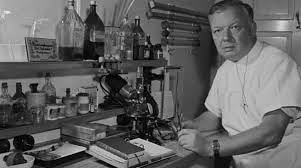
Werner Forssmann – the first man to insert a catheter into a human heart: his own

Bruce Bayer – scientist with Kodak whose invention of a colour filter array enabled digital imaging sensors to capture colour
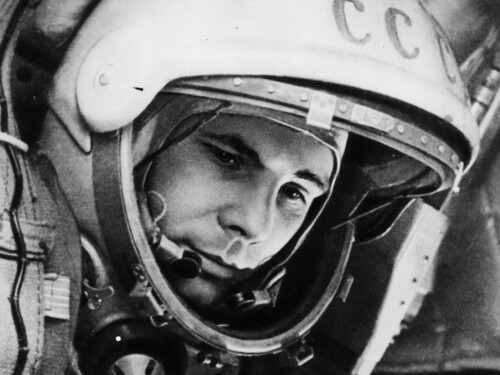
Yuri Gagarin – first man in space. My piece of fandom: http://www.spiked-online.com/newsite/article/10421

Sir Godfrey Hounsfield – inventor, with Robert Ledley, of the CAT scanner

Martin Cooper – inventor of the mobile phone

George Devol – 'father of robotics’ who helped to revolutionise carmaking

Thomas Tuohy – Windscale manager who doused the flames of the 1957 fire

Eugene Polley – TV remote controls
0 comments