
Trump’s foreign policy is all about China
 First published on spiked, January 2025

The warnings about a new ‘isolationist’ America ignore the true priorities of the incoming administration
Too often, mainstream-media accounts of US president Donald Trump’s approach to foreign policy descend into cod psychology.
We’re told he is emotionally inclined to cosy up to authoritarian leaders, from Chinese premier Xi Jinping to Russian president Vladimir Putin. Others claim he ‘embrace[s] unpredictability’ and loves to appear ‘crazy’. The US national editor at the Financial Times has even suggested that Trump sees the world as a jungle ruled by big predators determined to ‘pick off weak small ones’ – with America cast as the biggest predator of them all.
These interpretations explain very little. Geopolitical realities will have a far greater impact on US foreign policy than will the psyche of Donald Trump. His and his team’s approach will be characterised, above all, by improvisation in the face of events often beyond America’s control.
While Russia’s war with Ukraine and the ongoing conflagration in the Middle East are dominating the headlines, the US’s principal foreign-policy focus will continue to be China. Indeed, the prospective actions of America’s main global rival are set to dominate the geopolitical strategising of the incoming administration.
Trump is well aware that Xi has advanced China’s claims on the South China Sea against those of the Philippines, a US ally. He knows the Chinese Communist Party (CCP) sent an aircraft carrier and two other warships close to Japan last September, and that it is pursuing its national interests around the world. Most important of all, the CCP is open about its intent to annex Taiwan – a move which could bring China into conflict with the US and its Western allies, who are supportive of Taiwan’s independence.
The Economist has claimed that Trump’s ‘openness to deals with opponents’ might prompt him to sacrifice Taiwan as part of some broader agreement with China. After all, Trump has form for letting down allies. In Syria, he betrayed the Kurds in 2019, despite them playing a leading role in the fight against ISIS in the mid-2010s. Trump certainly wants Taiwan to do more for itself, and to spend more of its GDP on defence, rather relying on US military support.
But there’s several reasons to think Trump won’t simply abandon Taiwan. His administration is stuffed full of China hawks. And Xi’s own tactics won’t prompt any quick shift in the US’s Taiwan policy. After all, Xi is open about biding his time. Apparently, he has told China’s armed forces to be capable of mounting an invasion by 2027, rather than right now. In the meantime, Trump will likely focus on fortifying Aukus, the Indo-Pacific security pact between the US, Britain and Australia. Meanwhile, new secretary of state Marco Rubio will focus on bolstering the Philippines.
The US’s continued immersion in the affairs of the Indo-Pacific region might strike some as odd, given Trump’s much-vaunted ‘isolationist’ ambitions. It’s true that the incoming administration will strike an economically isolationist posture, imposing tariffs and non-tariff barriers to trade.
Yet the prospects of ‘America First’ isolationists in the Republican Party are being exaggerated. In practice, American inbound and outbound foreign direct investment (FDI) has long been too great to permit a high degree of isolationism. In 2023, FDI into the US rose by $227 billion to $5.39 trillion. Cumulative outbound investment abroad increased by $364 billion to $6.68 trillion.
Isolationism was not a serious option even in the 1930s, let alone today, when the world economy is much more integrated than it was back then. For example, Trump’s ‘drill, baby, drill’ policies on fossil fuels might, at the very most, allow America to remain a globally dominant energy producer – but they will never result in total independence from world energy markets.
Moreover, the US continues to put money into China, and vice versa. In October 2024, the CCP held $760 billion in US Treasury bonds. Though this was the lowest figure since 2009, China remained second only to Japan ($1.1 trillion) as a holder of US sovereign debt.
None of this is to suggest that America is too entangled ever to go to war with China. But there is no possibility that America can extract itself from world business, any more than it can cut off all trade with China.
Amid tensions with geopolitical rivals, especially China, the US will look to strengthen militarily. This will not be easy. As a percentage of GDP, US expenditure on troops and weapons had fallen from 6.8 per cent in 1982 to 3.4 per cent by 2023. Trump will therefore need to find the money to expand the US military – in traditional areas such as nuclear missiles, but also, and especially, in America’s security of supply in critical raw materials. The US will likely prepare more drones (not least, to protect undersea cables), hypersonic missiles to equal Russia’s, new weapons in space and the use there of electromagnetic pulse weapons. Trump will also scrap with China around the application of artificial intelligence to military systems.
Whatever else it might be, Trump’s foreign policy will be ruthlessly realist. He will not want the US to have to cover for the failings of other states. This includes those European NATO members who he accuses of not paying their way in defence, and Asian allies, such as Japan and South Korea, for similar reasons. Tokyo may have boosted its maritime and aerial capabilities recently, but Trump is likely to regard a defence spend of just two per cent of GDP as insufficient. As for South Korea, once the political turmoil there quietens down, Trump may again insist on Seoul sharing more defence costs.
We can also expect some belligerence in the Middle East, perhaps in Syria. And there will be no love-in with Israel’s government, be it that of Netanyahu or of his successors.
Either way, China will be the focus of US foreign policymaking. The relationship between these two superpowers over the next few years will have deep ramifications not just for America, but for the entire world.
Photo: File ID 56577382 | © Danny Raustadt | Dreamstime.com
Innovators I like

Robert Furchgott – discovered that nitric oxide transmits signals within the human body

Barry Marshall – showed that the bacterium Helicobacter pylori is the cause of most peptic ulcers, reversing decades of medical doctrine holding that ulcers were caused by stress, spicy foods, and too much acid

N Joseph Woodland – co-inventor of the barcode

Jocelyn Bell Burnell – she discovered the first radio pulsars

John Tyndall – the man who worked out why the sky was blue

Rosalind Franklin co-discovered the structure of DNA, with Crick and Watson

Rosalyn Sussman Yallow – development of radioimmunoassay (RIA), a method of quantifying minute amounts of biological substances in the body

Jonas Salk – discovery and development of the first successful polio vaccine

John Waterlow – discovered that lack of body potassium causes altitude sickness. First experiment: on himself

Werner Forssmann – the first man to insert a catheter into a human heart: his own

Bruce Bayer – scientist with Kodak whose invention of a colour filter array enabled digital imaging sensors to capture colour
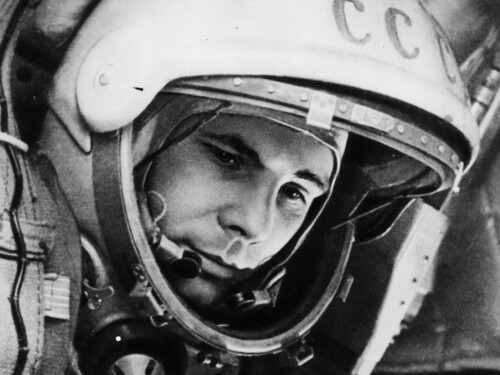
Yuri Gagarin – first man in space. My piece of fandom: http://www.spiked-online.com/newsite/article/10421

Sir Godfrey Hounsfield – inventor, with Robert Ledley, of the CAT scanner

Martin Cooper – inventor of the mobile phone

George Devol – 'father of robotics’ who helped to revolutionise carmaking

Thomas Tuohy – Windscale manager who doused the flames of the 1957 fire

Eugene Polley – TV remote controls
0 comments