
The Chagos Islands deal is an embarrassment
 First published in spiked, January 2025

Keir Starmer’s appeasement of Mauritius is a costly, cowardly mistake
The more we learn about the UK’s Chagos Islands deal, the more embarrassing it becomes. In October last year, Labour prime minister Keir Starmer agreed to a secretive deal with the then Mauritian prime minister, Pravind Jugnauth. The agreement would hand the sovereignty of the Chagos Islands, an archipelago of 60 tiny islands in the Indian Ocean, over to Mauritius. The UK would retain control of Diego Garcia, the largest island of the Chagos Archipelago, where almost 400 Anglo-American troops and 2,000 contractors are based. Under a 99-year lease, the UK was set to pay rent of almost £91million a year to Mauritius – in a deal worth £8.9 billion in total.
Now, Jugnauth’s successor, Navin Ramgoolam, is reported to want Starmer to pay an annual sum of £800million, plus ‘billions of pounds in reparations’. Other reports suggest that Ramgoolam has asked the UK to lump together several years of annual rent and pay it all upfront. Astonishingly, Starmer has offered to do just that. Ramgoolam may also want a lease shorter than the 99 years that was previously agreed, as well as – critically – more Mauritian control over Diego Garcia.
Since 1966, the UK has leased Diego Garcia to the US. The island acts as a joint US-UK airfield for bombers and long-haul military craft, a port for naval vessels and a station for tracking space satellites and conducting electronic espionage. Putting it under any kind of control by Mauritius will rile US president-elect Donald Trump – not least because the influence of the Chinese Communist Party (CCP) in Mauritius has grown significantly recently. Trump’s incoming secretary of state, Marco Rubio, has cast the Anglo-Mauritian deal as a ‘serious threat’ to America’s national security, as it would allow ‘Communist China to gain valuable intelligence on our naval-support facility’.
And what of the Chagossian people themselves? Starmer hasn’t even consulted or met with any of the 3,500 Chagossians living in the UK. In the 1960s, the British government forcibly removed the 1,500 Chagossians living in the archipelago to make way for the US military base. They were forbidden from living on any of the islands and subsequent governments have rejected the community’s appeals to be allowed to return.
Why is Starmer so willing to appease Mauritius, while angering the Americans, as well as just about everyone else involved? When announcing the deal back in October, Starmer framed it as a way of ‘addressing wrongs of the past’. This makes no sense. Yes, the British have exercised control of the Chagos Islands since the 18th century. But Mauritius itself has never had sovereignty over the islands.
Crucially, plenty of actual Chagossians aren’t at all keen about having their fate handed over to Mauritius. One leading Chagossian campaigner, Bernadette Dugasse, launched a judicial review last week aimed at halting the current negotiations between London and Mauritius. Starmer’s deal is not the reckoning that Chagossians want.
Starmer may yet reject Mauritius’s demands for reparations, as he has done over Britain’s historic slave trade. But he displays a reckless desire to continue to atone, at great expense, for Britain’s distant imperial past. The irony is that his deal would not provide any redress to the Chagossians – the very people that Britain actually wronged in living memory.
The Chagos fiasco also reveals Starmer’s cluelessness about contemporary geopolitics. Global tensions now focus on tiny spots of land, from islands to shoals, and geographical choke points of considerable strategic and military significance. This is especially the case in the South China Sea. Just last weekend, the authorities in Taipei ordered the interception of four Chinese coastguard ships near the tiny Taiwanese island of Kinmen, less than four miles off the Chinese mainland and a base for US Special Forces. Last week, the Philippines mobilised its air and sea assets off the coast of Capones Island, north-west of Manila, after the CCP deployed a giant 12,000-tonne coastguard vessel there. Everywhere from the Panama Canal to the Falkland Islands, Barbados to Greenland and Fiji to Papua New Guinea, the CCP has proven its ability to exploit geographic vulnerabilities and further its influence. Indeed, even Gibraltar has, historically, not been immune to the blandishments of Beijing. What happens around even a speck of land today could well spill over to a major confrontation tomorrow.
This is what Keir Starmer fundamentally does not understand. His betrayal of the Chagos Islands may be costly for the British taxpayer, but it could also spell disaster for the wider West at some point down the line.
Article is co-authored by James Woudhuysen and Tessa Clarke
Contains modified Copernicus Sentinel data 2021, Attribution, via Wikimedia Commons

Innovators I like

Robert Furchgott – discovered that nitric oxide transmits signals within the human body
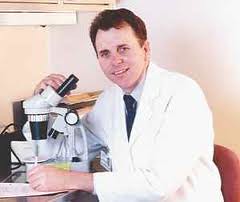
Barry Marshall – showed that the bacterium Helicobacter pylori is the cause of most peptic ulcers, reversing decades of medical doctrine holding that ulcers were caused by stress, spicy foods, and too much acid

N Joseph Woodland – co-inventor of the barcode
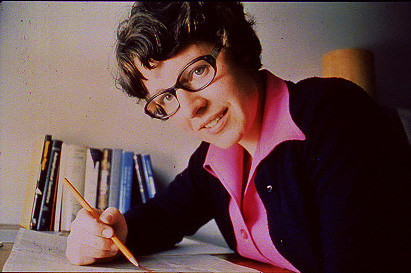
Jocelyn Bell Burnell – she discovered the first radio pulsars

John Tyndall – the man who worked out why the sky was blue

Rosalind Franklin co-discovered the structure of DNA, with Crick and Watson

Rosalyn Sussman Yallow – development of radioimmunoassay (RIA), a method of quantifying minute amounts of biological substances in the body

Jonas Salk – discovery and development of the first successful polio vaccine

John Waterlow – discovered that lack of body potassium causes altitude sickness. First experiment: on himself
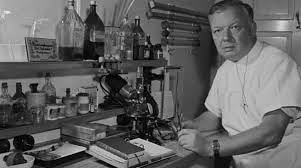
Werner Forssmann – the first man to insert a catheter into a human heart: his own

Bruce Bayer – scientist with Kodak whose invention of a colour filter array enabled digital imaging sensors to capture colour
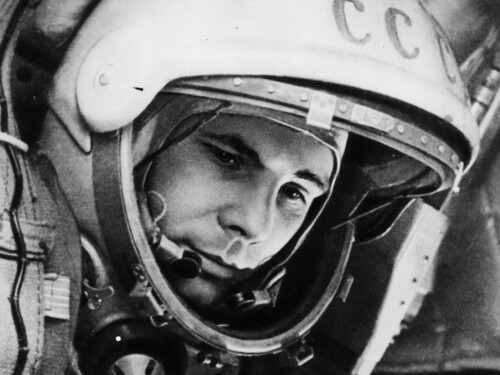
Yuri Gagarin – first man in space. My piece of fandom: http://www.spiked-online.com/newsite/article/10421

Sir Godfrey Hounsfield – inventor, with Robert Ledley, of the CAT scanner

Martin Cooper – inventor of the mobile phone

George Devol – 'father of robotics’ who helped to revolutionise carmaking

Thomas Tuohy – Windscale manager who doused the flames of the 1957 fire

Eugene Polley – TV remote controls
0 comments