
Net Zero is sending British steelmaking to the scrapyard
 First published in spiked, April 2025

Labour is putting its eco-delusions ahead of jobs and defence
Could this be the final nail in the coffin for the UK steel industry? British Steel looks set to close its last two blast furnaces as soon as June this year. The closure of the furnaces – in Scunthorpe, Lincolnshire – would mark the end of Britain’s ability to produce steel from scratch.
British Steel had been expecting a £1 billion subsidy from the UK government, in order to transition to ‘low-carbon steelmaking’. But after nearly two years, talks between Whitehall and Jingye, British Steel’s Chinese parent company, collapsed last week. Jingye was reportedly offered £500million to help build low-CO2 electric arc furnaces (EAFs), but, with British Steel already losing somewhere around £700,000 a day since 2020, this deal wasn’t enough for Jingye. Continuing to operate the furnaces is ‘no longer financially sustainable’, it said.
Business secretary Jonathan Reynolds has said he may invoke the Civil Contingencies Act to nationalise British Steel as quickly as possible and keep the Scunthorpe furnaces running. If he doesn’t, 2,700 jobs will be at risk, as will Britain’s ability to manufacture new steel. EAFs may be more eco-friendly, but they function by melting down scrap steel, rather than producing the virgin steel that is vital to industries like defence, infrastructure and high-end manufacturing. Since Tata Steel also shut down the Port Talbot steelworks for similar reasons last year, Britain could soon be completely unable to produce virgin steel.
How have we come to this? When a bankrupt British Steel was sold to Jingye in 2020, then Tory prime minister Boris Johnson claimed to have safeguarded 3,200 highly skilled jobs at Scunthorpe, as well as at steel mills in Skinningrove and Teesside. It was promised that ‘leading Chinese steelmaker Jingye’ would rescue the UK steel industry.
As it turns out, this was a pack of lies. Those jobs are now in jeopardy. And Jingye isn’t even China’s leading steelmaker. While China Baowu Group, the world’s largest steelmaker, produced about 130million tonnes of steel in 2023, Jingye makes just six million tonnes of steel and iron combined.
Labour and its fixation on Net Zero must also take responsibility for the pending death of British Steel. It was Labour, in 2023, that promised to invest in ‘all available clean-steel technologies… innovations to make the UK a world leader in clean steel’. In the same press release, then leader of the opposition Keir Starmer committed to ‘greening the steel that will make the solar panels and wind turbines built to power our homes for years to come’. This was thoroughly delusional. Not only are solar panels and wind turbines not the answer to our energy needs, but there also aren’t even any British factories making solar panels at present.
Similarly, it was Jonathan Reynolds, in February this year, who claimed that decarbonising steel ‘will never mean deindustrialisation’, boasting of Britain’s ‘world-leading research and development capabilities’ in the sector. But this isn’t true. Between 2021 and 2023, Tata, a leading investor in steel research and development, spent just £11million annually on ‘green steel’ research. It will take many more millions (and many more years) for decarbonisation to ever result in anything but deindustrialisation.
By making low-carbon EAFs a priority, Labour sealed the fate of British Steel and the steel industry in general. It is true that the quality of steel output from EAFs is improving, but virgin steel is still needed for many manufacturing needs. Some super-strong, super-tough grades of steel used for tanks and by the Royal Navy demand very low levels of impurity. Meanwhile, some specialised grades for civilian applications require the control of carbon or nitrogen to be very precise. These constraints are easier to fulfil with blast furnaces using virgin iron ore than they are with EAFs.
Labour’s ‘clean steel’ wild goose chase presents extra problems at a time when the UK is supposed to be rebuilding its military defences. As Robert Colvile, from the Centre for Policy Studies, has put it, Britain ‘can barely make steel anymore, so extra weapons might be a stretch’. Closing the Scunthorpe steelworks would also make the UK the only G7 member that is unable to produce its own virgin steel.
Labour is caught in a vice. The ‘green transition’ to steelmaking with no fossil fuels will be, according to management consultants McKinsey, a ‘significant’ challenge. Although EAFs could, in principle, be powered completely by renewables, ‘there is likely not sufficient scrap [metal] to meet global demand’. Two widely touted routes to ‘green’ steel – hot briquetted iron and direct reduced iron – will require green hydrogen, which is not currently being used anywhere at scale. ‘However’, McKinsey notes laconically, ‘much progress remains to be made’ with these technologies.
While we await that much-vaunted progress, threats to national security and blows to the economy are already coming thick and fast. Labour may want Net Zero, but protecting Britain’s population and boosting living standards will require a whole lot more CO2.
Photo: File ID 144283923 | © Media Whalestock | Dreamstime.com
Innovators I like

Robert Furchgott – discovered that nitric oxide transmits signals within the human body
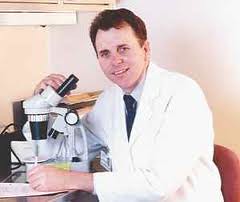
Barry Marshall – showed that the bacterium Helicobacter pylori is the cause of most peptic ulcers, reversing decades of medical doctrine holding that ulcers were caused by stress, spicy foods, and too much acid

N Joseph Woodland – co-inventor of the barcode
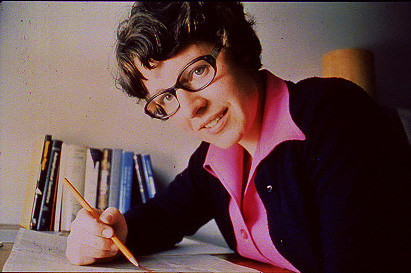
Jocelyn Bell Burnell – she discovered the first radio pulsars

John Tyndall – the man who worked out why the sky was blue

Rosalind Franklin co-discovered the structure of DNA, with Crick and Watson

Rosalyn Sussman Yallow – development of radioimmunoassay (RIA), a method of quantifying minute amounts of biological substances in the body

Jonas Salk – discovery and development of the first successful polio vaccine

John Waterlow – discovered that lack of body potassium causes altitude sickness. First experiment: on himself
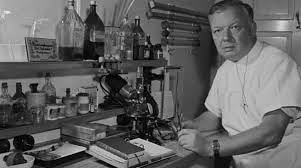
Werner Forssmann – the first man to insert a catheter into a human heart: his own

Bruce Bayer – scientist with Kodak whose invention of a colour filter array enabled digital imaging sensors to capture colour
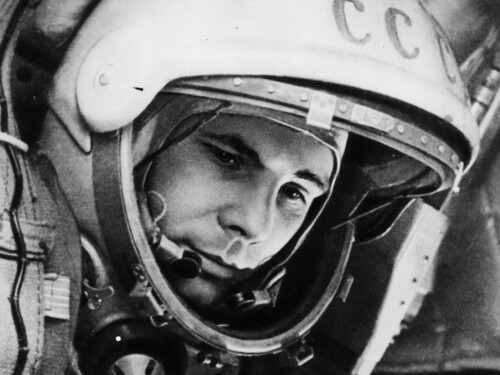
Yuri Gagarin – first man in space. My piece of fandom: http://www.spiked-online.com/newsite/article/10421

Sir Godfrey Hounsfield – inventor, with Robert Ledley, of the CAT scanner

Martin Cooper – inventor of the mobile phone

George Devol – 'father of robotics’ who helped to revolutionise carmaking

Thomas Tuohy – Windscale manager who doused the flames of the 1957 fire

Eugene Polley – TV remote controls
0 comments