
Fossil fuels are the stuff of life
 First Published on spiked, March 2026

The Iran War is a stark reminder of how much our civilisation relies on oil and gas
All manner of insults have been hurled at oil and gas in recent decades. Supposedly, it is ‘dirty’, ‘unsustainable’ and, we have been increasingly told, ‘irrelevant’. The war in Iran shows that there was a word missing in the environmentalists’ lexicon: ‘essential’. Last night’s strikes on the South Pars gas field in Iran and Qatar’s Ras Laffan liquified natural gas plant have sent prices soaring. This has compounded a crisis that was already underway, thanks to the closure of the Strait of Hormuz, through which a fifth of the world’s oil flows. While environmentalists like to claim that this shows the folly of our reliance on oil and gas, really it ought to remind us how important fossil fuels are in keeping civilisation afloat.
Oil and gas aren’t just essential to our energy needs. They are also a critical ingredient in everyday medication, much of which is life-saving. Our Net Zero-loving MPs might have forgotten this, but fortunately, doctors and pharmacists have not. This week, the Independent Pharmacies Association reminded UK health secretary Wes Streeting, that ‘many common drugs’ – including paracetamol, aspirin and antibiotics – ‘rely on petroleum-based ingredients as well as other raw materials sourced from the Middle East and beyond’. Dr Layla Hanbeck, the organisation’s chief executive, called for urgent stockpiling, and said that supply-chain disruptions from the Iran war would impact ‘essential treatments that millions rely on daily’.
Hanbeck is right. Today’s medicines rely on the carbon-based chemistry that defines fossil fuels. Benzene and toluene form precursors for painkillers, anaesthetics and antibiotics. Methanol, ethanol and acetone are vital to drug purification and formulation. Polymers derived from petrochemicals are used in drug-delivery technologies. And so on.
What about medical equipment? Petrochemicals are the feedstock for polypropylene, polyethylene and polyvinyl chloride. As cheap, light, strong and easily sterilised plastics, these are widely used in medical devices and accessories – including disposable syringes and needles, catheters, intravenous tubing, blood bags, membranes for dialysis and implants. On top of this, carbon fibre is used to build imaging equipment such as MRI machines, CT scanners and X-ray machines. It is in surgical instruments, wheelchairs and prosthetics. Also dependent on carbon fibre are blister packs, bottles for pills, sterile packaging film and tamper-proof seals that protect drugs from contamination and degradation.
Much of this is old hat. Yet we are continually making new discoveries about how vital fossil fuels are to medicine. Just this week, it was reported that recycling that plastic – another hated by-product of fossil fuels – could break down waste bottles into Levodopa, the main drug used to help the 160,000 Brits who suffer from Parkinson’s disease.
All these boons for health come from dirty – nay, evil! – fossil fuels. So evil, in fact, that energy secretary Ed Miliband believes the UK should make it nigh-on impossible for oil and gas to be extracted from the North Sea. Miliband might believe that he is on a heaven-sent mission to decarbonise Britain, but it is a quest that could soon create a hell for everyone who relies on medication to stay healthy, or indeed alive.
It isn’t just medicine and fuel that rely on fossil fuels, either. In agriculture, petrochemicals are key to fertilisers, pesticides and overall mechanisation. Fertilisers for crops, such as wheat, rice, and maize, are made with natural gas and coal. Also derived from fossil fuels are herbicides, insecticides and fungicides. And tractors, pumps and pipes for irrigation, crop storage systems and food packaging all rely on fossil fuels – either to make them or to power them, or both.
The ongoing war waged on fossil fuels by the UK’s political establishment doesn’t only defy logic. It defies humanity, too. If ever there was a time to rethink our blind rush to a Net Zero future, this is it. In the meantime, let’s hear it for carbon. It’s about time the stigma was removed from fossil fuels. Without them, we’d mostly be dead.
Photo: File ID 244439308 | © Nalidsa Sukprasert | Dreamstime.com
Innovators I like

Robert Furchgott – discovered that nitric oxide transmits signals within the human body

Barry Marshall – showed that the bacterium Helicobacter pylori is the cause of most peptic ulcers, reversing decades of medical doctrine holding that ulcers were caused by stress, spicy foods, and too much acid

N Joseph Woodland – co-inventor of the barcode

Jocelyn Bell Burnell – she discovered the first radio pulsars

John Tyndall – the man who worked out why the sky was blue

Rosalind Franklin co-discovered the structure of DNA, with Crick and Watson

Rosalyn Sussman Yallow – development of radioimmunoassay (RIA), a method of quantifying minute amounts of biological substances in the body

Jonas Salk – discovery and development of the first successful polio vaccine

John Waterlow – discovered that lack of body potassium causes altitude sickness. First experiment: on himself
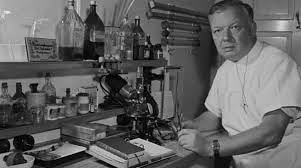
Werner Forssmann – the first man to insert a catheter into a human heart: his own

Bruce Bayer – scientist with Kodak whose invention of a colour filter array enabled digital imaging sensors to capture colour

Yuri Gagarin – first man in space. My piece of fandom: http://www.spiked-online.com/newsite/article/10421

Sir Godfrey Hounsfield – inventor, with Robert Ledley, of the CAT scanner

Martin Cooper – inventor of the mobile phone

George Devol – 'father of robotics’ who helped to revolutionise carmaking

Thomas Tuohy – Windscale manager who doused the flames of the 1957 fire

Eugene Polley – TV remote controls
0 comments